When my parents split up, I buried myself in books. I took comfort in my favorite characters and authors. That’s when I fell in love with Rick Riordan. His books were perfectly funny and sincere, and helped me through the most unstable era of my life. I was genuinely obsessed. I bought a Camp Halfblood shirt, and took way too many “choose your ideal breakfast, and we’ll tell you your godly parent” Buzzfeed quizzes. Like many young readers, his books were my gateway to mythology. I started with Greek, then Roman, Norse, and Egyptian mythology. I learned as much as my little brain could handle, but I still barely scratched the surface.
My name is Margot Sullivan. Welcome to The Man, The Myth, The Blog. Here, we will explore the history and future of myths together. We’ll discuss my favorite myths, the origins of mythology, and which myths have had the greatest impact on culture.
The Mythic Mission
Myths have been historically very important to mankind, their purpose being to explain mysteries of the universe, the human mind, and society when technology fails to. That may be why their popularity has fluctuated. Now that we have more technology than we handle we have stopped asking questions that can’t be immediately answered. The internet stifles creativity, and immediately disproves experimental theories about how or why things happen. Sometimes for fun I imagine living in a different time period (I always imagine being alive in the 80s), but I can’t help but feel that it’s an unrealistic expectation that I would thrive in a different time period. I’ve never known anything but the tech I’ve grown up around. Because of this the biggest myth I have encountered in real time is probably the tooth fairy. I believe myths most definitely have a place in a modern world, but the question is whether they are indicators of where we have been or where we are going. A key factor of mythology is its ability to unite people of a similar culture. I don’t believe that they will ever be able to do that at the same scale that they once could. Access to the internet will always cause discourse, and ultimately disagreement. There is little opportunity for a theological monoculture.
Sometimes I worry that mythology will fade into the background, but then I remember the impact that mythology had on me. I love hearing about old stories and trying to understand what it must have been like when they were created. I think that they are really cool historical markers, but given the chance can indicate where society is headed. Trending kinds of mythology tell me what kinds of values are important to people. During the Renaissance, the resurgence of Greek texts indicated a large cultural trend surrounding the importance of humanism. This is why they will always be relevant. Their appearances in the media may wane, but their function will always remain. According to Psychology Today myths, “[attempt] to make sense of our perceptions and feelings within our experience of the world in a narrative format.” Humans will always have feelings, and will always need help understanding them. Myths will also always be there to help. That is why I look to them. When I feel unsure I often find myself thinking about classic lessons and using their wisdom to the best of my ability. As long as there are myths, I will love them.
Legends I Live For
Now that we’ve determined why myths came about and their relevance in the modern world, I get to do something super fun. I am going to tell you about a couple of my favorite myths, my interpretation, and how others view them. You’d better buckle up because I did not hold back. Get ready for a boatload of details, and a whole lot of drama.
I figured since Greek mythology is probably the most well known, I’d get it out of the way first. I’m also going to double down and talk about the most famous of all Greek heroes, Hercules. Before I really get into it, first, I’m going to be annoying. Hercules is his Roman name, what he was eventually called after the Roman Empire toppled the Greek and rebranded most of their myths. Because of this I’m going to call him by his original name, Heracles. Okay, let’s get into it. It’s widely agreed upon that Heracles had a bummer of a personality. Many modern portrayals of him depict him as a bully with anger issues, but despite this he is still the central figure in my favorite Greek myth. It’s important to know that Heracles was the son of Zeus and Alcmene. If you’re already a mythology pro, you know that Zeus was not married to Alcmene, he was married to Hera. Because Hera was not a chill lady, she immediately made baby Heracles her enemy. She was infuriated that her husband would cheat on her, and made it her mission to torture her husband’s child. Earlier when I said that Heracles was his original name, that was not technically true. He was born Alcides but his name was changed to Heracles literally meaning “glory of Hera” in an attempt to appease her. Fast forward to a grownup Heracles. He is a hero, has a family, but Hera still hates him. She decides to curse him to go mad. He kills his wife and children, and when her spell breaks he is devastated. He goes to the Oracle of Delphi to ask for forgiveness and she tells him to seek out King Eurystheus, and to complete every task he is given by the royal. These tasks became known as the 12 labors. He was required to to kill the Nemean Lion, kill the Lernaean Hydra, capture the Ceryneian Hind, capture the Erymanthian Boar, clean the stables of Augeas in one day, kill the Stymphalian Birds, capture the Cretan Bull, steal the Mares of Diomedes, steal the girdle of the queen of the Amazons, Hippolyta, and to steal the cattle of the monster Geryon. It’s a little funny that to pay for a soul crushing act of destruction that Heracles was required to steal and kill, but who am I to judge?
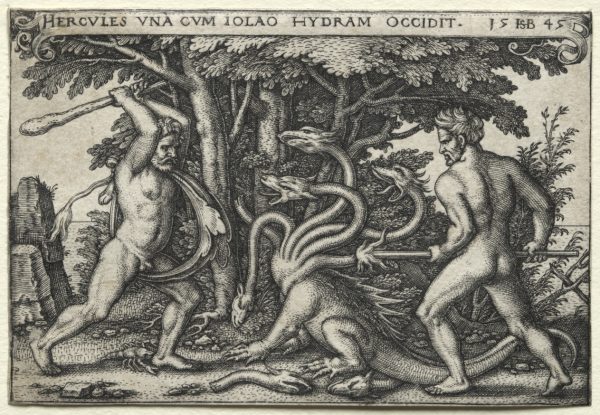
The reason this story is my favorite is because of the fact that he was not originally supposed to do 2 of these labors. 2 were disqualified by the king because Heracles asked for help, and therefore had to replace the tasks with new ones. To me, this represents how no matter how big your mistake it is never too late to fix, and even though it may be painful to ask for help it is worth it in the end. It is a somewhat elementary lesson, but an important one to me nevertheless. At the end of the story Heracles becomes immortal, and Hera can no longer harm him.
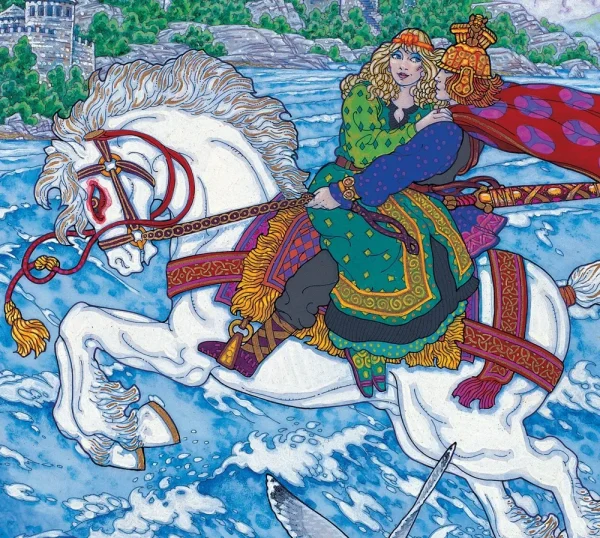
That last one was pretty well known, so let’s talk about a lesser known favorite. Oisin in the Land of Tir na nÓg. This is a Celtic story that I recently happened upon while doing some research just for fun. It centers around Oisin, a warrior and poet. He meets the goddess, Niamh, who persuades him to join her in a magical land that stops its residents from aging. Everyday there is feasting and parties. It is a paradise. After a while Oisin grows tired of this life. The endless celebration does not compare to the embrace of his loved ones. He asks Niamh if he could visit his old life, and she grants his wish. There is one stipulation, he must stay on the white horse she
has given him for his journey. He cannot get off it, not even for a second. So he makes the trip back to his homeland. To his horror, he had been in that land for hundreds of years. The passage of time didn’t phase him while he was immortal. Everyone he had known was dead. The land he used to know looked completely different. Nothing was the same. As he wanders through this new landscape he sees an old man rolling a large stone up out of a field. Oisin reaches down to help the man, but his saddle slips. As his body touches the ground he is no longer blessed with Niamh’s immortality. His form turns to dust and he blows away.
What moved me to write about this story was the symbolism of the old man and the stone. I thought that was a very clever way to depict mortality. The specifics of the man being old are a stark contrast to immortal Oisin, and his struggle to move the stone is an obvious reference to the inevitability of death. No one can endure the weight of the boulder forever, eventually you will crumble under the pressure. It was interesting, though, that at this moment toward the end of this mortal man’s life Oisin is the one to perish. It is when he reaches to help using his immortal strength, that he meets his end. Over the years it has been commonly accepted that this represents the fragility of life. Even the mightiest, or supposedly immortal, are in danger of dying.
A Popular Problem
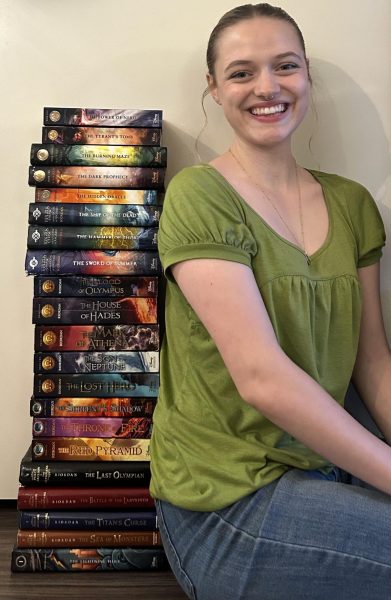
I initially got into mythology through Rick Riordan books. My older brother had read Percy Jackson and really enjoyed it, so I decided to buy my own copy of the first book. I was immediately hooked, and started reading all of his books. The same year I bought two encyclopedias of Norse and Greek mythology because I wanted to get my hands on anything and everything mythology related. His books are just one representation of myths in popular culture. Books, movies, and TV shows really help to keep mythology alive.
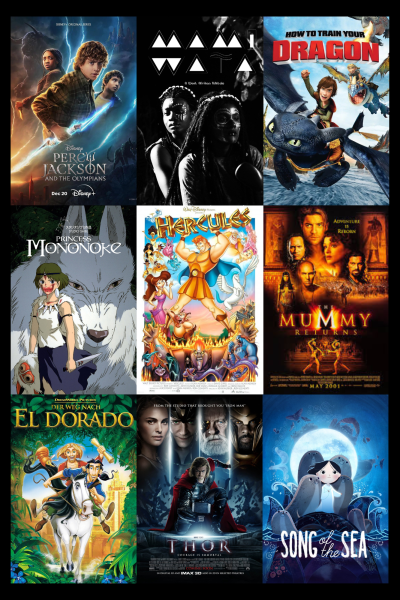
Marvel movies are a very mainstream example of mythology in popular culture. Characters like Loki and Thor are really prevalent in the MCU. This is a really interesting example of the preservation of mythology because of the universe these characters live in. Most of the time they are not surrounded by a world that reflects our own. They exist in and among humans and modern technology. In my first post I mentioned that myths as means to explain the universe are less effective in a modern world. This may be true, but movies help combat it. Using Marvel as an example we can see that not only are those figures still important in popular culture, but also that the juxtaposition of ancient characters and tech is a humorous combination. It displays a self awareness about mythology because they chose to make these characters interact with the modern world in a confused and bumbling fashion. Huge figures in caped costumes in the middle of a diner in New York is an objectively funny scene. These movies also made me think about the change that has occurred in the way that myths are spread. Streaming a movie on your phone while sitting on the toilet is very different from ancient Egyptians harvesting a plant and weaving it into papyrus so that they could write on it.
As far as representation goes, Hollywood has some work to do when it comes to mythology. I love the Percy Jackson series as much as the next nerd but shows, movies, and books are over saturated with Greek mythology. Greek, Norse, and Egyptian mythology are everywhere. I think we have an incredibly narrow view of myths today. We have the tools to spread knowledge from different cultures all over the world, which is why I find it infuriating that the same three kinds of myths are completely dominating the others. Movies like Song of the Sea, which focuses on Celtic mythology, are so important. They teach people new stories, and through that keep them alive. Mami Wata, a 2023 fantasy film based on West African mythology is exactly the kind of thing I want to see. The whole world’s mythology should be told. It’s time for Hollywood to step up.