
I’ve always been so proud of being Liberian. I love the culture and the people. But the food, oh my goodness, It’s just so good. The mix of different intricate spices and ingredients come together so well. Before you even enter your house, the smell of sweet stew escapes through the locked door, calling you in. I personally can always tell which stew my mom has cooked just by the smell of the kitchen.
Before I get started, let me introduce myself first. My name is Fatumata Swaray and this is “ Fatu’s kitchen” or as we call it in Mandingo “ Fatu’s Bah”. Here, I want to walk you through that very experience. We will dive into different core Liberian foods. I will tell you what makes each dish so special, its origin, and why it might be eaten in Liberia. All this information will be explained detailedly while going back to the basics. I am excited to have you here, and I advise you to get some classic plantain chips prior to reading.
May 15, 2026 – The Staple Dish
A few weeks ago at work, I went on my meal break and took out the rice with stew from my lunch bag. As I was warming it up, the distinct smell circled through the break room. Just then my coworker walked in, sniffing the spicy, tangy, almost eye-watery air, prompting her to ask“ Wait, is that torborgee soup? ”. As a Liberian you know it’s torborgee stew when you smell it. We both ended up eating the delicious torborgee together.
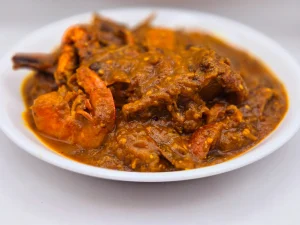
Torborgee is a thick, spicy, and flavorful Liberian stew with a vibrant color.
The dish originated from Lofa county in Liberia, but it can be seen in other parts of west Africa like Guinea and Sierra Leone. It is made from African eggplants or “bitter balls” as we call it in Liberia, which bring that satisfying sourness. There are many variations of torborgee, including but not limited to: beans, okra, and cassava leaf torborgee. Showing that we Liberians live for this stew.

is a food that is eaten everyday. It takes about two hours to make, ensuring that you have already cooked your protein. Personally my favorite protein to add is chicken feet or goat meat. Goat meat is sweet so it balances out the flavor, while chicken feet is very tender when boiled properly. After the stew is cooked, it’s now time to plate it on some hot, steaming, jasmine rice. The gooey stew and soft rice keeps your stomach wanting more.
Sometimes when I eat good torborgee it reminds me of Liberia. It reminds me of sitting on the ground alongside my grandma with a big bowl of rice with torborgee in front of us. We eat with our hands and make sure to take from our individual sides of the bowl. And whenever I would reach for rice on her side, she would smack my hand a little, letting me know that it is improper. We laugh, talk, and vent about our day over a bowl of warm torborgee. I look forward to being in Liberia this summer to live this experience again.
May 22, 2026 – It’s Everywhere
This West African dish originated in Ghana, but almost all counties in West Africa eat it. Most describe this food as bland and tasteless. It’s currently trendy on TikTok recently with most people trying it with Nigerian egusi soup. It also looks like mashed potatoes to some.
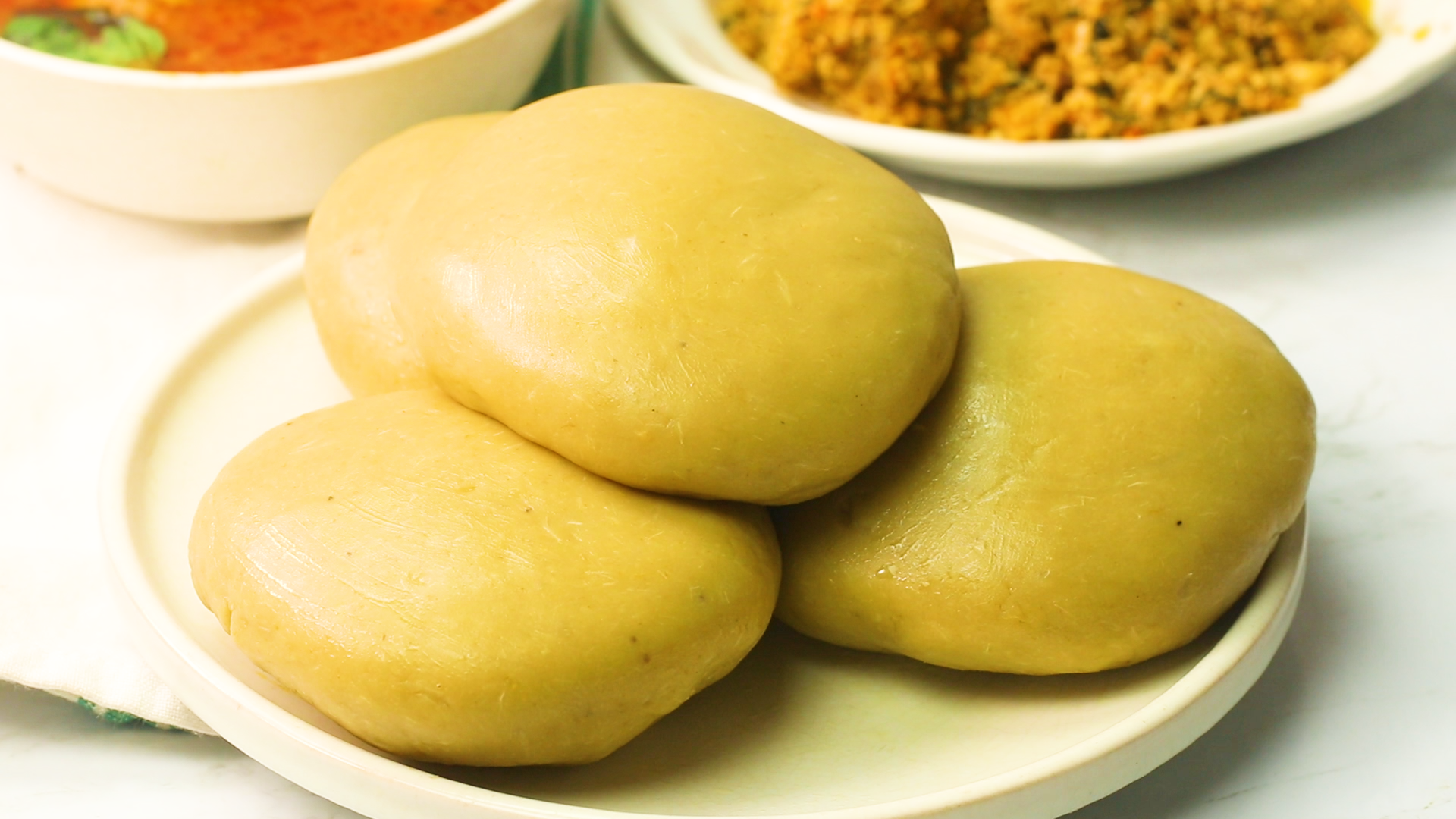
The dish is fufu. Fufu is a thick, dough-like food, often made from cassava, yam, or plantains. My favorite being plantains, which you can watch a tutorial on below. As stated above, Fufu does not have a taste like anything, because it’s meant to be eaten with soup. In Liberia, fufu is eaten with pepper soup. And just like it sounds, it’s very spicy. The color of the pepper soup can be anywhere from brownish green to light red based on the color of the peppers. Ingredients for pepper soup include: water, hot peppers, and seasonings. The hot soup has your noise running while eating it. Fufu and pepper soup is good to eat any day, but especially when you are sick because it brings that much needed warmth to you. It’s a great comfort food.
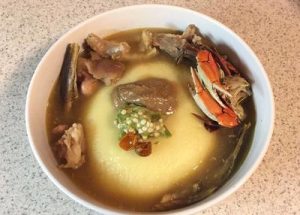
“Swallow” is another word for fufu. Culturally, fufu is meant to be swallowed. We don’t chew it because it’s already smooth, so it’s easier to just swallow. Now if you’re wondering how this is done, I’ll walk you through it. First, you grab a small section of fufu with your hand or a spoon based on the consistency of the soup you are eating it with. If it’s a slippery soup like egusi or peanut butter, it’s best to use your hands to dip the fufu into the soup. On the other hand, if it’s a watery soup like Liberian pepper soup, it’s best to use a spoon. Then you swallow it.
I might be betraying my people a bit, but as a kid, I chewed fufu until I was like 13 or 14. Then one day I swallowed it, and it was life changing. Don’t be afraid to try fufu because you think you won’t be able to swallow it. The truth is that you can chew fufu too
May 29, 2026 – Its Liberian food by association
Last but definitely not least is attieke. Attieke is a popular dish throughout West Africa, originating from Côte d’Ivoire. It’s made from grated cassava giving it a light and fluffy texture. The flavor is tangy and a little sour. Though attieke is not from Liberia, we eat it a lot. When I say “ a lot” I mean, almost every Liberian function you go to, attieke is there.
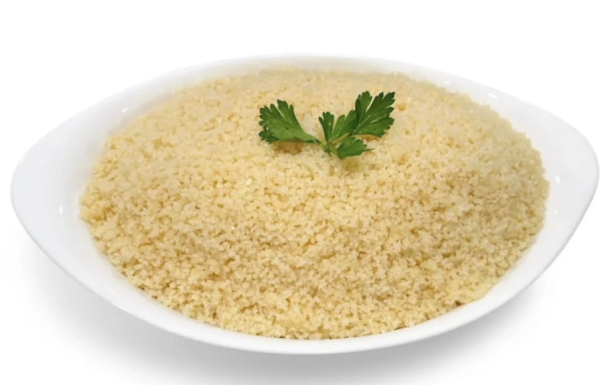
Like fufu, Attieke is almost never eaten alone. It’s eaten with fried fish, fried plantains, and an onion based sauce. I love to add some cucumbers and bell peppers for a nice crunch. Culturally, we eat attieke with our hands because it allows us to squeeze the attieke, fish, and plantain into a ball that can fit in our mouths, capturing all the elements at once. You know the fish is good when you hear that satisfying sound as you grab a piece and it separates from the crispy, kind of sticky, fish skin. The fish melts in your mouth and the plantains carry the dish with the sweetness it brings. But it is the attieke that holds the dish together.
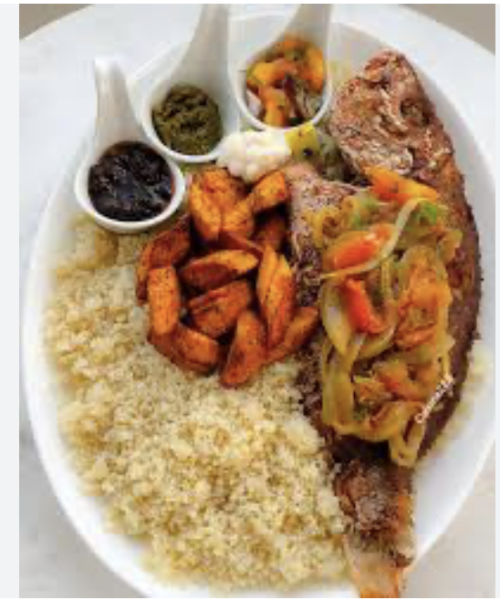
This meal is one of the few liberian foods I can actually make on my own. Everything is cooked separately, so it’s not an overwhelming recipe. All you have to do is fry seasoned fish and plantains. This part is optional but you can make an onion sauce as well, so it’s not too dry. The onion sauce is caramelized onions, red spicy peppers, and maggi cubes mixed together in a skillet. Then you microwave the attieke for a few minutes. Lastly, you assemble: attieke is first, then the fish and plantains are on the side, the onion sauce is added on top of the attieke.
This wraps up our time together. It’s been really nice to share a part of my culture that I don’t usually get the opportunity to. I hope you’ve learned something new. Goodbye for now!
Best regards,
Fatumata Swaray