

What are differences in children’s media?
PBS Kids is a great resource for free educational programming for children. If you have local or cable television or a library card you have access to this free educational programming. For example libraries like the one in Excelsior or Eden Prairie have computers in the kids section with preloaded PBS Kids games. On these computers your kids can watch and play free educational games. Another reason libraries are awesome is because they carry children’s movies and educational films. So if you’re looking for something to watch and don’t have a streaming platform you can check out films for the library for free. Shows like Wild Kratts or The Dinosaur Train oftentimes have great educational value to them. For example Wild Kratts educates kids on different animals and how they work together in an ecosystem. The Dinosaur Train often covers spelling, paleontology, and math. Studies show that these programs can help with developing reading, writing and math skills in preschoolers.

Another option for media focused on children is the Disney channel or Nickelodeon channel. These channels are less focused on education and more towards entertainment. These channels do not offer free programming and are only driven by entertainment. For example most of the princess films focus on a story of a prince saving the princess. While these stories don’t offer any educational value they do explore social aspects. I’d say these films help develop a great imagination and encourage children to explore and build a personality. These films are usually focused more on relationship development than learning which is easier for a child to engage with but sometimes can have poor effects on growth especially depending on the form of media they consume. A good example of social learning is Snow White which helps children identify different emotional stereotypes through the dwarves who embody different emotions like anger or sadness.
Overall I think a good balance of these two types of films is the best for a child to develop along with their peers. When a child is exposed to a balance between educational and emotional media it has the potential to positively impact both educational and social readiness. Oftentimes being able to communicate with their peers effectively while also having the knowledge to excel.
How can media affect childhood development?
Over the last twenty years media use in youth has increased leading to an increased concern on its effects on the brain. The Toddler Attentional Behaviours and Learning with Touchscreens found “in the UK that 51% of infants between 6 and 11 months” are using devices for over an hour a day. This shows an extreme increase in media usage in youth over the last twenty years. What is the effect of this increase you may ask.
Well a study done by the American Academy of Pediatrics shows that children can learn and imitate behaviors from television. For example, kids exposed to violent forms of media and television shows can develop violent behaviors. Though you may think most cartoons or pg shows are fine, some have the potential of showing violent acts. Shows like Dragon Ball which has some pg episodes but ultimately has very violent fight scenes. Canada’s longitudinal cohort study also shows higher levels of screen time can affect development screening tests oftentimes lowering scores. Adolescent Brain cognitive development also did a study and they found differences in MRI brain scans in children who had more than 7 hours of screen time per day. Oftentimes kids with more screen time have decreased development in areas of the brain that visualize letters. However, the part of the brain that learns to multi-task can grow.
Overall studies have shown that media can be helpful in childhood development when put in moderation of 1-2 hours a day. Once it exceeds 1-2 hours daily it’s harder for children to develop reading, writing, and social skills. Studies also show that exposure to unfiltered media can lead to a formation of bad behavior especially in ages 3-5. Studies also show that children learn better face to face or through books. It’s been proven to help reading, writing and social skills if parents limit screen time usage. According to Canada’s 24 hour movement guidelines kids should get an hour of physical activity a day, 2 hours or less of recreational screen time, and 9-11 hours of sleep per night. That’s not including school which takes up about 7-8 hours of a child’s day. These are the guidelines that have been proven to be the best for development in youth.
You should limit your kids’ consumption of media and screen time so they will do better in school and their brain will develop normally and also to protect from future violent behavior.
Here is a video showing then potential impacts of over exposer to Media.
How to protect your child against media exposure?

The first thing you should do if you want your child to be protected but also able to grow up in the age of technology is at ages 3-5 introduce an iPad or computer for only 30 minutes a day. Make sure if you do this you only put a few educational apps like pbs kids or spelling reading or math apps with fun components to them. At first they should only be allowed an hour a day. This hour can help with math, reading and writing skills. At that age I got my first iPad and it had games like math sushi where I learned basic addition and subtraction while having fun.
Ages 5-7 you should increase screen time to 1 hour. Screen time focused on educational use and other fun apps like YouTube kids or Minecraft, something they can play with their friends. Around this age I was introduced to Minecraft and YouTube kids which helped me engage with my friends in class and learn creative building skills. I asked a nanny, Jean Eksuzian about her real life experiences with children and overexposure to the media and here is what she said “I think personally for 5-7, I don’t think they should have more than an hour a day, real minimal” her response from real world experience alines with my guide of about an hour a day.
At ages 7-10 you should follow the Canadian recommendation of 2-3 hours. This will allow kids to engage with their friends in games. Build skills like team work in games like Fortnight, Minecraft or YouTube. Personally I think you should only allow one hour on YouTube and any other apps can go over that because they are teamwork games that build community and relationships are especially important. Make sure you don’t allow any social media like Instagram, TikTok, or SnapChat. At this age it can cause kids to be over exposed to media and decrease attention spans. Also, with YouTube you should turn off shorts so they can’t watch them. If they want to talk with their friends they should talk over text and not social media. Make sure your kids have their friends’ numbers for texting. Give infinite time for texts just in case something happens while at a friend’s house. Lastly, don’t allow the phone to go to school.
Around ages 11-12 you can start exposing your kids to social media like SnapChat. Limit it to friends and family and monitor who they have added and also monitor their stories to make sure they’re building a positive social media portfolio. You should also watch out for harmful content like gun violence, over use of profanity, or even just simply street racing videos. It can give kids bad ideas like stealing a car or a gun. Have conversations with your kids about internet safety and appropriate uses.
At ages 13-15 allow your kid to get the actual YouTube app and play some violent games like Dead by Daylight. Also, allow them to watch more gory and violent films like Demon Slayer. Around this time they won’t be as influenced by those films and hopefully not exhibit violent behaviors. Increase screen time to 3 hours a day and take away screen time based on if they do homework or not.
At age 16-18 you should allow your kids to get Instagram, TikTok and other popular social media platforms. Continue to monitor usage to ensure they are being safe. As they get closer to 18 years old monitor their usage less. I find the more trust you put in your kid the better behavior they have online at that age, especially if they’ve had different social media issues explained to them.
By 18+ I would recommend giving your child free rain. I think if you don’t expose your child to any media at all it can lead to poor decisions with the media when they finally have access to it. Exposing them too soon and too much can be damaging to a kid and can lead to development of violent or unwanted behaviors.
In my interview we also touched on the impact of over exposure and here’s what Jean said
“I have a one year old who just got an iPad. I don’t recommend a one year old having an iPad. I have experience with a two and a half year old with an iPad and he can not hear other voices. He is only zeroing in on that iPad and I can talk to him in loud voices and do something really interesting. Nothing will distract him, he doesn’t hear a word I’m saying he just stares at it. At the same time he’s staring at the iPad there’s a big screen tv turned on with SpongeBob playing at the same time. So it’s a duel.”
This quote shows how too much exposure to media can affect behavior and relationship building skills. This kid already started a multi tasking grind and he is so focused on technology that he has lost all contact from the outside world. This is an extreme example. Overall it’s your decision how your kid is exposed to media and what they will do but I feel like this is a good guide.
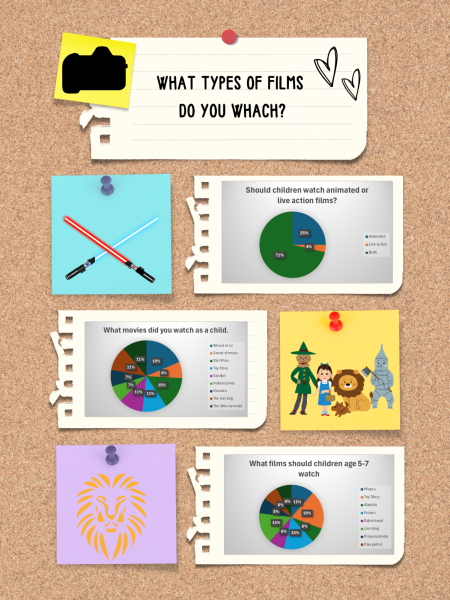
here is a Infographic showing different films people watched when they where younger. This also shows there recommendations for films kids 5-7 can watch.