

Symbolism of Milk in Film
As children, many of us are taught to view milk as something wholesome, associated with growth, safety, and innocence. In film, directors understand that every object on screen serves a purpose, whether we are aware of it or not. Filmmakers rely on visual symbols (props, colors, lighting) to communicate meaning and emotion without dialogue. Milk, a common element in film, often has a deeper significance.
Advertising campaigns like “Got Milk?” reinforce its image as a staple of health and normalcy. As a result, movies and TV shows use milk to either confirm preconceived notions or derail them.
For example, in Catch Me If You Can, Frank Abagnale Jr., played by Leonardo DiCaprio, drinks a glass of milk while pretending to be a commercial pilot. Surrounded by two older pilots in a cockpit, the milk feels childish. The choice reminds the audience that Frank is just a 16-year-old boy who ran away from home pretending to be a man. Although he is committing fraud, the milk makes him feel child-like. His poor decisions seem more like a continuation of his youthful mistakes than actual criminal behavior.
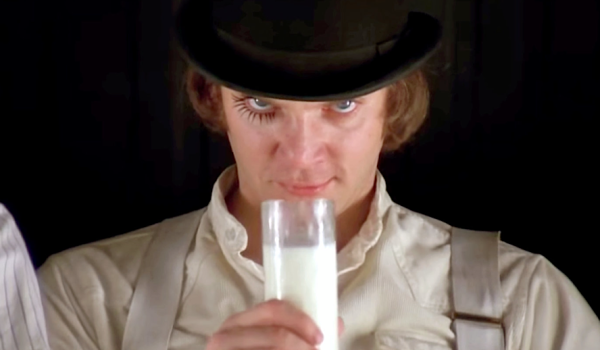
Contrast this with A Clockwork Orange. In the opening scene, Alex and his gang are seen drinking drug-laced milk at the Korova Milk Bar. This bar does not have a liquor license, which means that minors, like 15-year-old Alex, can be served alcohol. The boys drink Moloko Plus (Milk Plus), laced with various stimulants and hallucinations, before going on a night rampage of theft, assault, and rape. The disturbing image creates feelings of confusion and disgust in the audience. The once innocent symbol becomes something entirely sinister.
Other films show similar tension. The blue milk in Star Wars: A New Hope shows Luke Skywalker’s sheltered life on Tatooine, showing youthful simplicity and innocence in a wide galaxy. While in Mad Max: Fury Road, breastmilk is weaponized, turning nurture into power.
Milk in the cinema is often used as a visual contrast. To the common observer, it looks pure, but in a different context, it shows corruption and/or immaturity. In film, even something as simple as a glass of milk can become a warning to the audience.
Can You Find the Dairy Milk?
The Milk Industry
The United States dairy industry produces over 226 billion pounds of milk annually, whereas the United Kingdom produces only 33 billion pounds of milk annually. The US has been promoting milk intake since the 1940s, attempting to make it seem like a necessity in all homes. The practices of making all of this milk have been kept hidden from the public eye to maintain profits, but the truth is that industrial dairy practices are widely considered inhumane.
Dairy Farmers of America measures animal comfort level at high rates of chronic disease and stress. To put this into perspective, a cow’s lifespan is approximately 25 years; however, in the industry, they are typically killed after just 5 years of life. In the industry, not only do they treat their animals poorly, but they also disregard the environmental impact of their practices. The manure of dairy cows produces greenhouse gas emissions, which contribute to climate change. Poor handling of manure can contaminate the water supply and aquatic ecosystems. It damages our natural landscapes, including prairies, wetlands, and forests.
I surveyed 37 individuals to understand the public’s perspective on factory farming practices. In the question “When you think about the dairy industry, what words or feelings come to mind?” Many stated that they have concerns about the environment, including “CO2 emissions” and “greenhouse gas emissions.” Others focused more on the inhumane treatment of cows in industrial farming scenes. One person explains how they wish to have “high standards for the animals as well as the products produced.” They want “ethical standards and ecological standards.” That’s not to discredit smaller dairy farms that truly treat the animals with care.
Lastly, many survey respondents showed dairy consumption habits since childhood by mentioning their love for some of their favorite dairy products, including “milk,” “cheese,” and “ice cream.” This study shows how everyone is interested in the milk industry differently, focusing on different topics and possibly showing a well-defined view of what is happening. However, those who listed dairy products that they enjoy consuming show how consumer consumption can influence their decisions regarding the industry.
In Western culture, there is an abundance of options when walking down the milk aisle at supermarkets. You can find dairy milk, almond milk, oat milk, lactose-free milk, and any kind of milk you could possibly want. The question is “why?”

The number of options available is endless. Could it be that people simply enjoy the idea of choice? Well, there are a lot of steps that go into consumer behavior, including: decision-making process, choice deferral, psychological factors, personal factors, and social influence. In the dairy industry, consumer choice is typically driven by personal factors. This can mean health consciousness, price, and, increasingly, lactose intolerance. The environmental benefits of plant-based milk are very prevalent. For example, making oat milk uses far less water, land, and energy than the production of cow’s milk. It is also incredibly healthy because they are typically lower in saturated fat and calories, and have the additional benefit of being cholesterol-free. Commercial success has led to greater availability, which has encouraged other brands to enter the market, making consumer choice even larger.
However, not everyone has been celebrating the recent rise of plant-based milk. The dairy industry has been fighting back by challenging the word “milk” to marketing terms like “creamy.” In December of 2024, the UK Court of Appeal ruled in favor of a dairy association and against plant-based milk manufacturer Oatly over Oatly’s request to register the trademark “Post Milk Generation.” The courts cited outdated regulations that define milk strictly as a “mammary secretion.” Despite all of this, plant-based milk continues to succeed.
Got Milk Opinions? A Talk with Meghan McCarthy

One afternoon, I sat down with my friend Meghan McCarthy to talk about something surprisingly complicated: milk. We were just hanging out and joking around, but as we talked, I realized how many little decisions and opinions are hidden in something as simple as what kind of milk you pour over your cereal. Meghan’s answers were funny, honest, and super real, and they showed me how much our routines, memories, and values all show up in the carton we reach for in the dairy aisle.
GRACE – Have your milk preferences changed over time?
MEGHAN – I would say so, yeah. When I was younger, I drank whole milk because that’s what my family bought. But in the last few years, I’ve been trying to switch to lower-fat options and sometimes plant-based alternatives.
Part of it is just getting older and being more aware of what I’m putting in my body, and part of it is seeing so many different options in the store now. Like, when we were kids there was just “milk.” Now there’s oat, almond, soy, lactose-free, all that.
GRACE – What’s your opinion on plant-based milk substitutes?

MEGHAN – I’m sure they are great options for people who are lactose intolerant or vegan or stuff like that, but I definitely prefer dairy milk. Don’t get me wrong, I do drink alternative milk in smoothies and stuff, but I would definitely say dairy milk is the way to go. I just feel like plant-based milks have their “place” for me.
GRACE – How do you feel about the current marketing of milk products?
MEGHAN – I don’t see many advertisements for milk, but I do know those “Got Milk?” campaigns that they used to do. Those were really weird, haha. I remember seeing celebrities with milk mustaches and being like, “No one actually looks like that when they drink milk.” I mean I’m sure that the milk industry advertises, but it’s just not typically advertised to me I guess. Now I feel like I see more ads for plant-based milks or fancy coffee creamers than I do for regular milk, which is kinda funny because regular milk is what I still end up buying.