

(Cecelia Griggs)
A Great Aquarium on a Superior Lake
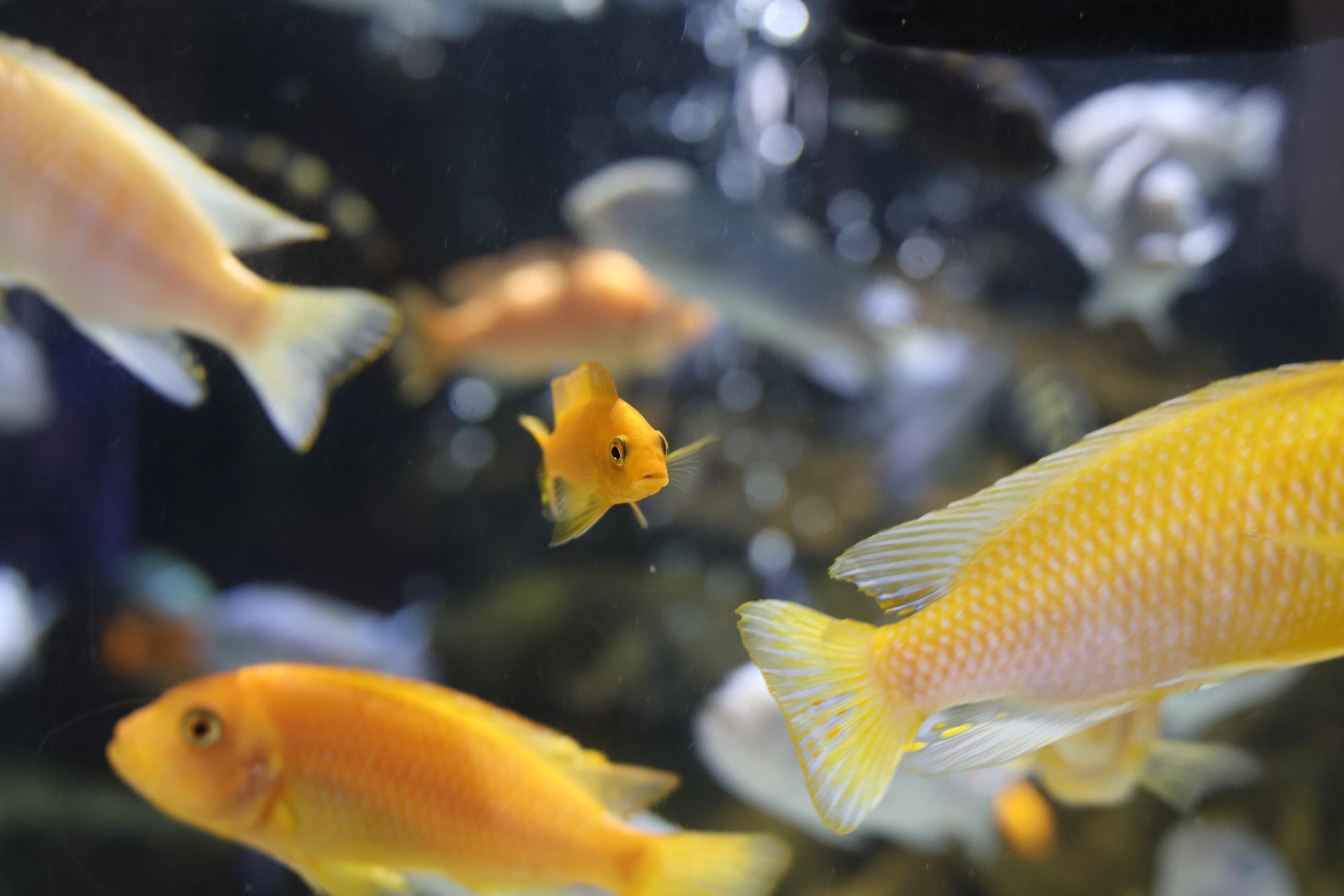
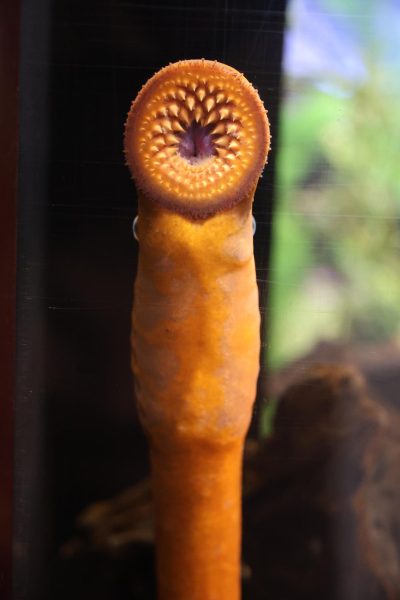
Opened in 2000 on the Duluth waterfront, Great Lakes Aquarium is a famous piece of the North Shore. Great Lakes Aquarium was established in 1998, and the construction of the aquarium took place over 3.5 years and cost $34 million. A unique feature of the aquarium is the range of species and ecosystems. Featuring 250 species of a menagerie of animals, and exhibits such as their sturgeon touch pool, the largest in North America, or the Amazon River exhibit. This range is interesting as most aquariums choose to focus purely on freshwater or saltwater species. Some of the species they house are piranha, lamprey, a variety of trout, burbot, otters, and many more. An unexpected exhibit of theirs is Mose the Turkey Vulture. He was deemed non-releasable, but is currently thriving in the Raptor Ridge exhibit. This just goes to show Great Lakes Aquarium’s dedication to conservation, and expanding from just water based exhibits.
The aquarium is recognized as a Mission Blue Hope Spot as the first and only freshwater Hope Spot. What is a Blue Hope Spot? According to the Shedd Aquarium’s website they are special places across the globe recognized as scientifically critical to our ocean’s health and designated for protection under a global conservation campaign. Additionally, Great Lakes Aquarium is committed to using their power to inform and act upon environmental issues. Their practices internally and externally reflect that. A specific example of this is their Aquatic Invader exhibit. It offers a different perspective on invasive species, and teaches visitors how those species travel to new locations, muddle with the local populations, and how you can help prevent the spread of invasive species.
Great Lakes aquarium hasn’t always sailed on smooth seas. Due to construction delays near opening, and worries about the long term viability, the aquarium closed for a few months in 2002. After years of private management by Ripley’s Entertainment, Great Lakes Aquarium returned to its original non-profit status with new leadership and a trimmed staff and began more than a decade of sustained growth that fueled a dramatic turnaround and has made it the most visited paid attraction in the city of Duluth. When the time is taken to reflect, the aquarium’s story is heartwarming and inspiring to see just how far they have come.
Diving Deep With Hanna Potava: The Great Lakes Senior Aquarist
During my trip to Great Lakes Aquarium in Duluth I spoke to Hanna Potava, who is the Senior Aquarist. Her perspective and knowledge on everything fishy were so impressive and important. We discussed how she began working at Great Lakes, her favorite part of the job, and what she wishes everyone knew about fish.
When did you start working at Great Lakes?
I started working here in 2022.
Did you always want to work here? What was the degree that got you to this role?
I didn’t necessarily want to work here, but I wanted to work in the aquatics field in general. So, I got a general biology degree. I’m from the DC area originally, so my plan was to get into the Smithsonian Institution, and COVID, unfortunately, put a bit of a wrench in that plan. So, I ended up applying here off of Indeed and yeah, then I just got hired here.
What’s your favorite part of your job?
My favorite part of the job is definitely, aside from getting to hang out with the animals, which is the coolest part. It’s building decor and actually environments for the animals, like getting to design and implement plants, to build environments that suit those animals needs.
What’s the weirdest part of your job?
Ooh, animals get into some strange situations that you wouldn’t think that they would get themselves into. So you think you have a barrier that would keep an animal out, and somehow it manages to slip past that. Animals also find themselves in interesting positions and places. When our ambassadors upstairs will give us animal concern calls, you never know what you’re going to get. Sometimes it’s something easy, and sometimes you’re like, how did that happen?
What animal at the aquarium do you feel like has the most personality?
I think we have a few really good examples of animals that are more personable. We have an American eel upstairs. His name is Gumby. He has a jaw deformity that he was born with, and he’s been hand fed and hand raised by people all his life. He comes from an eel farm, and the farmer took a liking to him because he was different looking. And he’s got a lot of personality. He knows when you come up to the tank, and I’m not gonna say he enjoys hanging out with people, but he deliberately chooses to be in a space with people. Even when we don’t have food, if we just have our hands in the tank, he’s coming up and hanging out. One of our keepers actually did an enrichment with him where she just stuck her whole face in the water with a snorkel, and he came out, and he hung out, and he just put himself right in her snorkel, and just was kind of rubbing up against her face and stuff. It was very cute. I don’t know if he was just looking for food, but there wasn’t any food in the water, so he was choosing to interact with us, which was very cool. Another animal that comes to my mind as well is my personal favorite animal at the aquarium. His name is Kevin and he’s a Lake Whitefish upstairs. He does A to B target training, and I’ve worked really close with them since I started here. Similarly, he chooses to hang out with me if I’m in the tank in waiters. He’ll be right underfoot, or if I’m doing activities in the tank he just really chooses to be in that same space with me, even if there’s no food incentive. I think it just gives him something to do or if I’m personifying him, I think he does like to hang out with people.
What’s your favorite marine fun fact?
Well one of my favorite animals at the aquarium is the giant isopod. They were a dream species of mine to work with. I think it’s really cool that they can go multiple years without eating anything.

What’s one thing that you wish everyone did know about the aquarium or fish?
I would like people to realize and understand that fish are animals, but they’re more complex than I think a lot of people understand. A lot of people were just raised fishing, and I’m not hating nonfishers at all. I enjoy recreational fishing as well. I think until just recently, we didn’t understand that lobsters felt pain or that fish have complex nervous systems. I think that anyone who comes into the aquarium, I want them to leave having more respect for these animals. It’s important to understand that water makes up 70 plus percent of the Earth.
Mose: The Great Lakes’s Turkey Vulture
While Great Lakes Aquarium focuses mainly on fish they do have some other interesting displays. Mose, their resident Turkey Vulture, is one of them.

Need to Relax: Just Keep Swimming
Experts agree that the global aquarium market is expected to grow in 2026, and no place is a better example of this increasing fin-terest than the Great Lakes Aquarium. Its projected 235,000 visitor count for the next year showcases the rising wave of aquarium attendance and people’s interest in aquatic animals perfectly. A survey was conducted to understand where the appreciation humans have for fish stems from.
Across 57 respondents 96.5% had been to an aquarium and most commonly people had been to Sea Life at the Mall of America, the Monterey Bay Aquarium, or the aquarium inside the Minnesota Zoo. Most respondents had visited an aquarium either in the past year (26.3%), 2-5 years (40.4%), or 6-10 years (24.6%). The average rating of their experience was 4.02 stars.
The rating may be so high because of interactive elements such as petting sharks, stingrays, sturgeons or starfish. Responses focusing on walking through a tunnel or being surrounded by fish were also quite common. This begs the question, why were these experiences so memorable?
In a report compiled by The National Library of Medicine, one experiment involving the viewing of live fish proved quite interesting. The results revealed that during or after viewing a tank of live fish, participants’ anxiety was lowered, and greater relaxation and mood were reported. This calming effect may also be related to proximity to water. In his book Blue Mind, Dr. Wallace J. Nicholas argues that humans have a neurologically linked affinity for water. It can induce a mildly meditative and calm state in the human brain. This effect is often attributed to the sound of water, and at most aquariums water filters, water features, or fish moving to create noise might cause a “Blue Mind” effect during an aquarium visit. White and natural noise have a calming effect on the brain because it can have a disabling effect on the body’s flight or fight response. The combination of being near water, water noises, and the fish then make each visitors’ experience one of tranquility and memorability.
If you want to test the “Blue Mind” effect out on yourself watch this short video! All footage was filmed at Great Lakes Aquarium.