
How Art Makes the Twin Cities
There are many things that you could describe as integral to the identity of the Twin Cities. The Twin Cities has the biggest mall in America, some of the best stadiums in the country, and a metropolitan area that rivals cities like Chicago. I don’t believe any of that gives Minneapolis and Saint Paul their flair though. In fact, according to 86.9% of residents polled, It’s not the things that are in the city, but rather the people and their art that makes the cities one of the most creative and unique cities in the world.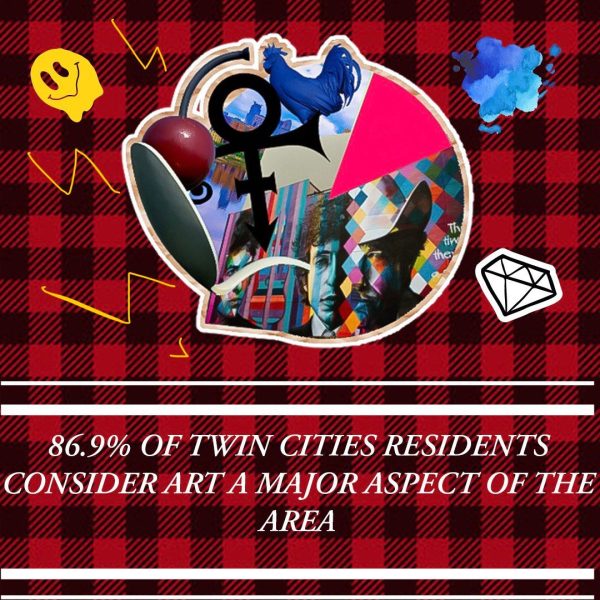
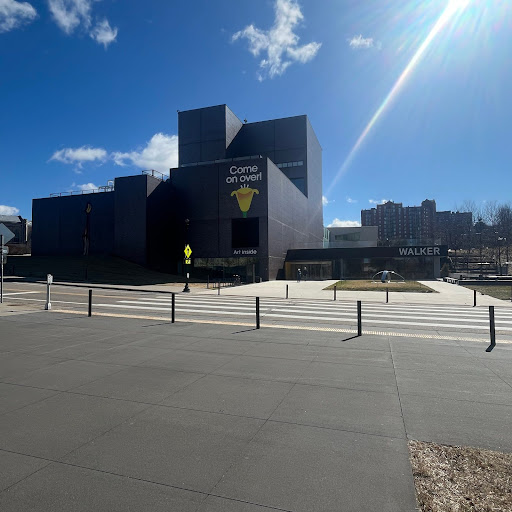
The twin cities are not lacking when it comes to museums dedicated to art. Within the cities, there are around 15 major museums dedicated to the arts. These museums span many different mediums and settings and host an incredibly vast amount of artists both new and old. Despite their grand reach though, they are unarguably Minnesotan. One great example is one of the most popular museums in the cities, The Walker Museum of Contemporary Art. This museum holds some of the most famous works of Contemporary art, including exhibits from Andy Warhol and even Keith Haring. These pieces aren’t just here for show though. They actually come together to make a distinctly Minneapolis landmark. For example, out of the two thousand artists shown at the Walker, a large majority of them are Native American and feature prominent themes from Native Minnesotan culture. Some older pieces serve as love letters to the traditions, showcasing what mattered to the people of the past. Other pieces use the mediums of the past though to comment on events now. They use themes of nature and the past to teach us how to embody care and love in our lives today.
Art can be seen past the museums and exhibits though. Look upon the streets and buildings of Minneapolis and you’ll see grandiose works painted on the side of buildings. Many of these murals are commissioned directly by the city, showcasing idols like Bob Dylan and the Immortal Prince. These pieces often showcase prideful icons of Minnesota such as their focus on nature, diversity, and progress. These are often the largest and most popular sights in Minneapolis, giving onlookers an amazing sight while they walk the cities. One large aspect of Minnesota and especially the Twin Cities though through murals and graffiti is protest. Especially since the extrajudicial killing of George Floyd, Minnesota has been a huge hub of protest against injustice and oppression in America. This is seen through not only the actions of residents in the cities, but also the art produced by Minnesotans. Murals dedicated to human rights movements such as Black Lives Matter and ICE-OUT have been exploding in popularity, showcasing the Twin Cities as not only a place of art, but of conversation and movement as well. Street art is often seen as a reaction to current events, but in Minnesota murals and graffiti serve as a reminder of the city’s voice and history.
Visual art can be found in droves within the Twin Cities, but ignoring all the other countless mediums made by artists here would be missing half of the story. Minneapolis is not just a hotbed for the fine arts, but the performing and more experimental arts as well. In fact, there’s an entire genre of music called Minneapolis Sound that draws influences from the diversity and culture of the Twin Cities. Factors such as smooth synthesizers and a jazz-like flow inspired famous artists such as Prince and continues to live on today through artists like Lizzo and Bruno Mars. Other places where performance arts thrive are within the cities’ many theaters. Places like the Guthrie Theater and the Orchestra Hall hold massive performances and productions, using carefully crafted props and storylines to make plays and musicals like you’ve never seen before. These performances all make Minnesota rich with creativity and storytelling.
The Twin Cities are full of art, from the fine to the experimental. When it comes to the Minneapolis identity, nothing comes close to fully describing the vibrancy and meaning of Cities other than the art that comes from within.
The Sculptures of the Twin Cities
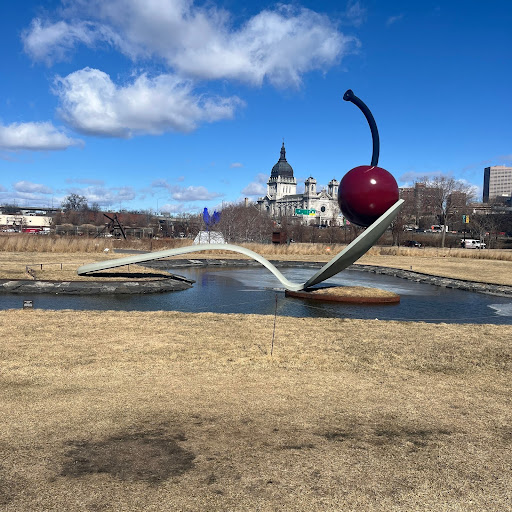
One of the most identifiable parts of the Twin Cities and even the identities of everyone who lives there is the Spoonbridge and Cherry sculpture. Its iconic simplicity and popping personality make it a staple of both Minneapolis and Saint Paul, commonly being used on t-shirts and news
broadcasts to show Minnesotan pride. This sculpture is one of many that make up the city’s diverse art landscape, and though it stands as the most recognizable, the Spoonbridge and Cherry is far from the only sculpture in the city.
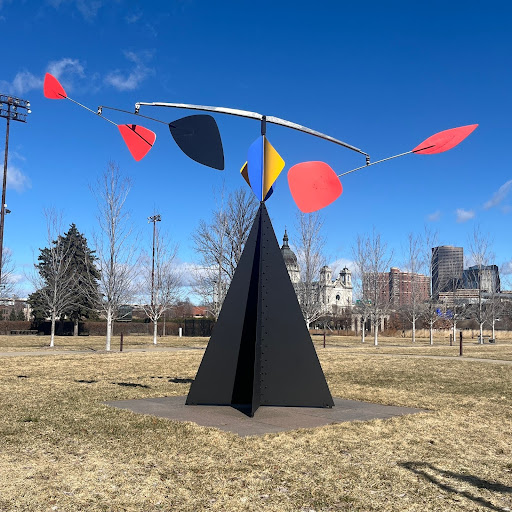
The Spoonbridge and Cherry is actually one of many different structures in the Walker’s Sculpture garden, located right outside of the Contemporary art museum. This garden serves as a great landscape of greenery, providing some much needed nature to the city as well as housing monumental pieces that wouldn’t fit in the typical exhibit. From the wide spanning Okciyapi circles to the narrow and tall Arikdea beams, the complex form of the Woodrow horse to the simplistic yet meaningful LOVE statue; every statue and art piece has a unique and powerful place in the garden.
Just north of the Cherry and Spoonbridge is the recent yet ever iconic Blue Rooster. Built in 2013, the Hahn/Cock was built by German artist Katharina Fritsch. Its size and detail despite its solid blue color show how modern objects can hold deep symbolic meaning to a variety of people. Many of these sculptures are also useful in a park context as well. One example is the benches that litter the front of the park, lined with words from Jenny Holzer. These messages are controversial and incredibly charged, commonly touching on cultural issues and soft spots. These benches serve as a resting spot for visitors, while also providing them with an insightful discussion about the words around them.
When we think about art, one tends to laser focus on the typical painting. Minneapolis and Saint Paul though serve to showcase the more experimental art in our world, whether it be controversial words or an incredibly large spoon.
Can Can Wonderland : Artists Supporting Artists
In an increasingly crowded and challenging market, many up and coming artists have struggled to get any support to continue adding meaning to the world. Though the ease of access to materials has arguably improved, getting your name out into the public sphere and sustaining yourself off art has never been more challenging. This is a major problem that spans America as a whole, though in an old can factory in Minneapolis, one group of independent artists works to change that.
I met with Jeannie Kenevan, Director of marketing at Can Can Wonderland. Together we talked about what Can Can is and how it originated and still works to this day as a vehicle for independent artists in Minneapolis and St. Paul.
Q: Alright, can you tell me your name and a little bit about yourself?
A: Hi, I’m Jeannie Canavan, Director of Marketing for Can Can Wonderland in St. Paul, Minnesota.
Q: So, what does Can Can mean to you?
A: Fundamentally, it was created to be a public benefits corporation for the arts and an economic engine for the arts, and also a place that people in the past wouldn’t have been able to come to for fun, and when they come in here, we hope that they find a piece of joy in the nostalgia here.
Q: You have this empty can factory. You take on this huge space. How does it go from warehouse to lively wonderland?
A: The building itself in its entirety is almost 500,000 square feet that was a can factory where tin cans were made, from 1902 to 2007. When it closed, because they didn’t need it anymore at that large capacity and because of modernization of systems, it was just a huge empty space that was left to be either nothing or something. And a small group of people had a vision to make this part of it into an entertainment center and venue where people could come and play mini golf, see live entertainment on stage, look at art hanging from the ceiling and on the walls and all over the space, and to adventure for a little bit.
Q: A lot of the art you have here is very experimental. I wouldn’t say nonsensical, but very wondrous. What inspirations do your artists usually draw from?
A: Since it was one big clean slate of walls lots of space that was white gray it needed a lot of color and with so many different individuals as artists here in the twin cities The founders really wanted them to be able to do something colorful, whimsical, expression of what they were feeling in the moment or in the larger context of time. So you really do have a montage of street art, of metal fabrication art, giant pink mastodon that doesn’t exist in the real world. It’s all inspired by imagination and individualism.
Q: So what kind of things do you do now to support artists and especially local artists in the Twin Cities?
A: Recently we worked with curators called Art You Heart who are connected to a number of artists in the community and we had a gallery exhibition of 50 different posters designed by 50 different artists and they all came and brought people and everybody got to see the art in print format and then it went on to live as digital art projected onto what we call here in the metro area the Witch’s Hat Tower, the Prospect Park area of Minneapolis. and it was all done to mark this moment in time and also to raise money. It was a charitable fundraiser to be able to raise thousands of dollars for people who are in need at the time and that’s a really lovely way of how artists and community and different mutual aid benefits can come together because it’s expressive and it’s based on feeling and emotion and a lot of context that can be brought into it, a lot of storytelling and highly visual.
Q: Alright, well I’ll just leave it off with, say you have a message for independent artists, especially in Minneapolis, who see CanCan and get inspired by just the collaboration, the workspace, and what you can do with this experimental sort of immersive theater. What advice would you give them to sort of express themselves?
A: Talk about it with others. They can approach us directly either by stopping in or going through the website and submitting an artist inquiry form. That’s a really good way to start. We love showcasing individual artists. Artists can come as buskers here where they are setting up their own table exhibit. We have art markets that are more of a programmed group in the main stage area or along the boardwalk area. It’s really important to us that we are a place that is inclusive and that people can come and use us as a resource for getting launched in their own medium.
Q: All right, well, thank you so much for your time. This has been amazing!
A: Thanks for the questions!