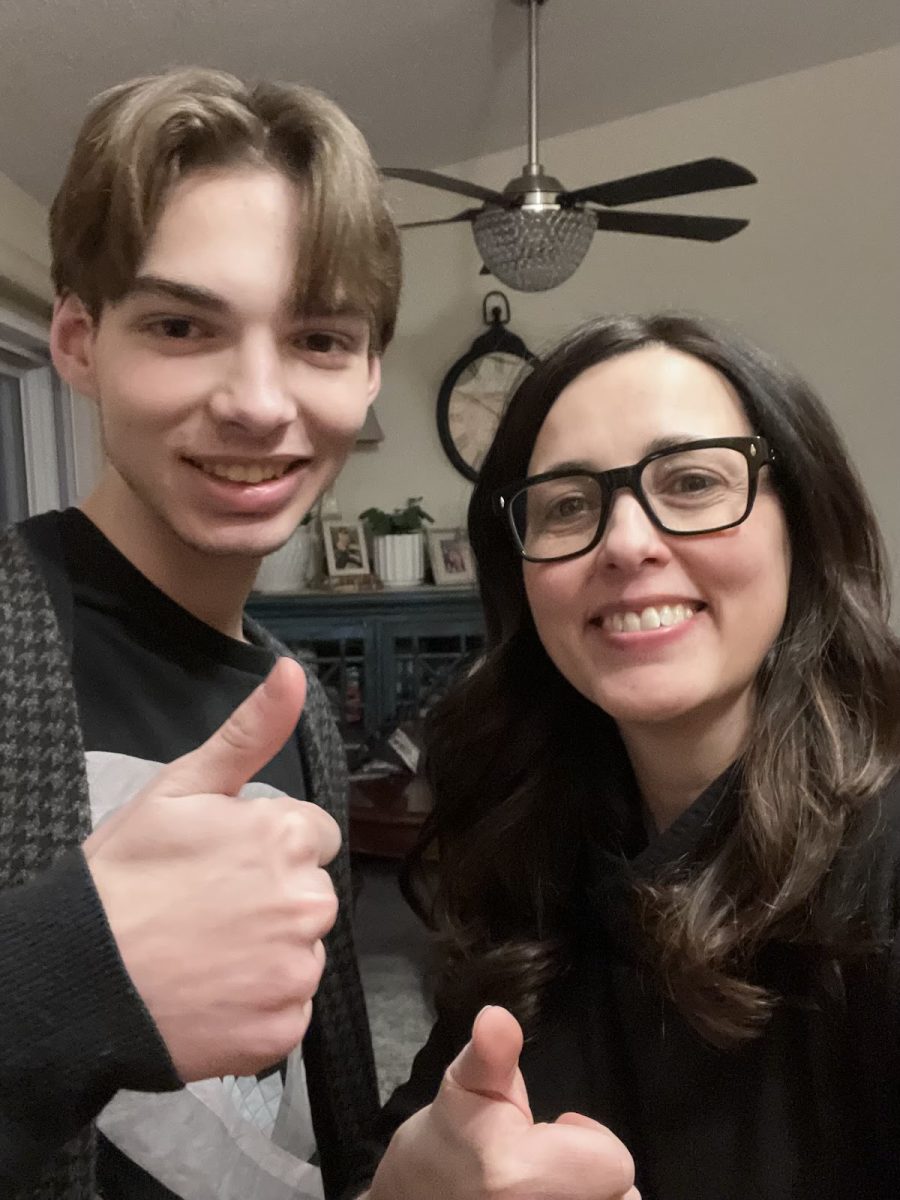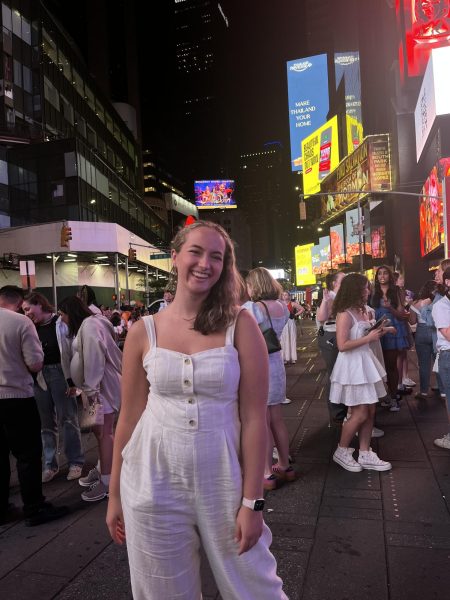
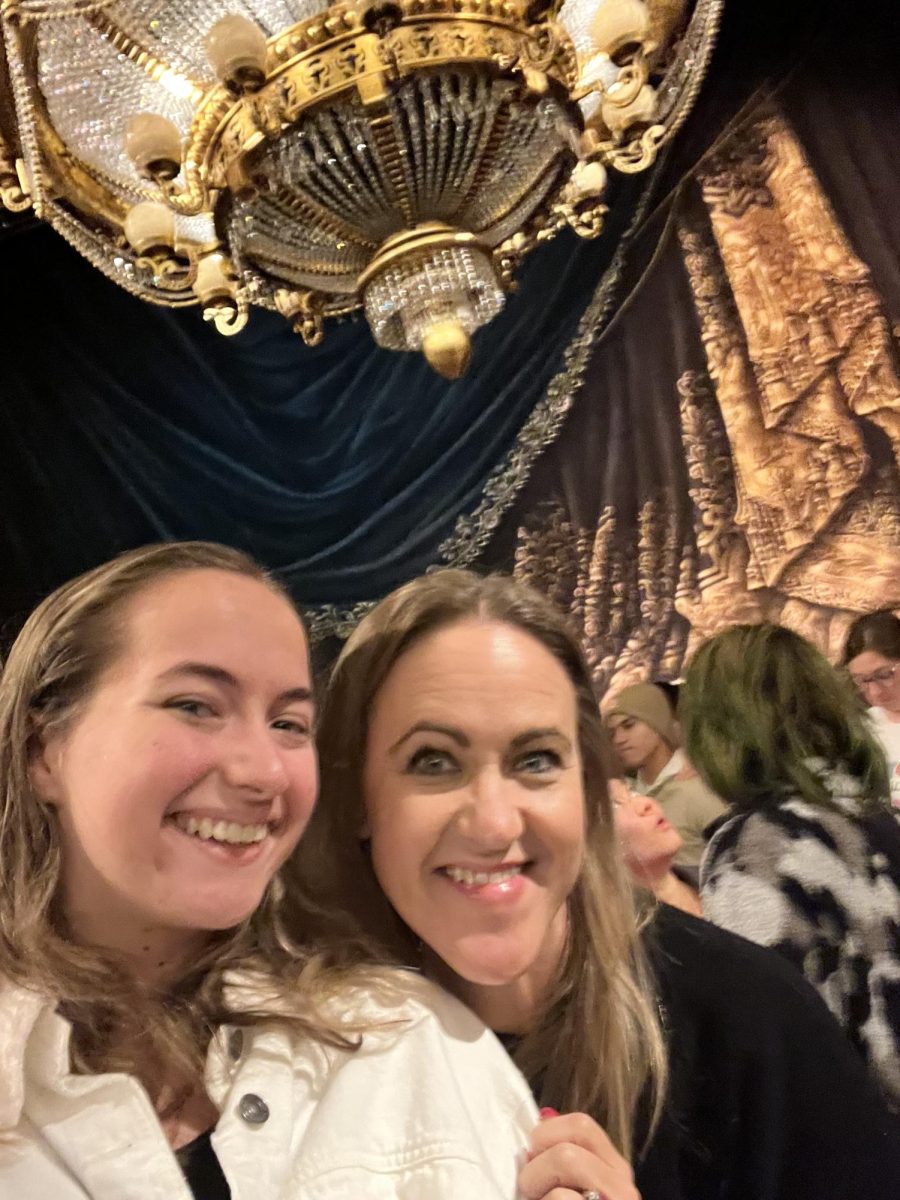
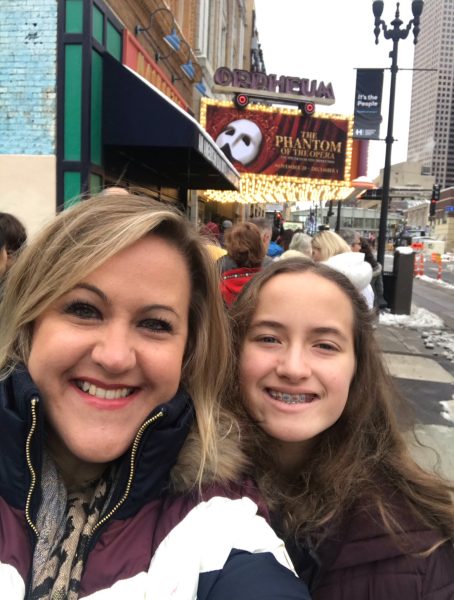
As the snow fell on a cold winter’s night, my mom and I were leaving a performance of Sir Andrew Lloyd Webber’s critically acclaimed “Phantom Of The Opera”. Upon our ride home, I took a minute to interview her about the performance we had just witnessed. The first few moments felt like a typical post-show debrief, but as time went on, we got into topics such as her wishes and hopes for my future as I took a chance on the theatre world. We also took the time to share our thoughts on how theatre has evolved for the better over the years, thanks to the help of technology and diversity. As a performer, taking the time to talk with her, the audience, opened my mind to things I would have never known before. Spending these post-show nights with her as college ticks inevitability closer will always be some of my favorite memories of my youth.
Ella: Where have you seen The Phantom Of The Opera musical before?
Mom: I saw it with Grandma in Chicago at least two times. And then I saw it with Grandma in Minneapolis one time—she flew up here, and we saw it when she came in…and then I saw it with you two times.
Ella: Has there been a favorite—like, a show that you and I have seen together? Or, like, top three. Here in Minneapolis or in total?
Mom: I think here in Minneapolis. I really liked when you and I saw Newsies when you were little, because that was the first show I brought you to here. We bought the tickets specifically to see Newsies. That wasn’t part of our package—it was before that. We specifically made a trip for it. Hamilton, obviously, was the best show I’ve ever seen with you, because it was all part of the surprise and everything.
Ella: What has changed since the last time you saw the musical?
Mom: I was thinking about the staging, and when they sang “Phantom of the Opera”, I did not like how it started, but I liked how it ended with the boat and everything. You saw the stairs disappear into the wall, and then I know that I’ve seen it where they have, like, suspended stairs, like a bridge, and they kind of, like, swing this way and that way. I thought it was, like, really stupid to have them just, like, walking this way, walking that way, but then I liked the candles coming up from the floor, and I liked how they came out.
Ella: Was there a character you could see me portray in the show?
Mom: I mean, it’s hard because this is just—and as I was watching it, I was thinking about you, and I was thinking that—could you be in this show? But it’s just hard because it’s an opera show. You know, everybody who’s in there is an operatic voice, which you are not an operatic voice.
Ella: If you were to redirect the show, what would be the main thing that you would change?
Mom: I think her dressing room scene was kind of off-center, and then they had the ballerinas on stage right and her dressing room was stage left, and I don’t know, I feel like that should have been—I felt like that was, like, crammed. So, like, that I would probably change. But I think, like, you know, without changing the story, it was pretty standard.
Ella: Towards the end, there was a technical difficulty. What do you think happened?
Mom: Yeah. I got—I mean, I feel like it was the monkey [musicbox], because he [the stage manager addressing the situation] got up, and that’s where the monkey was… But I don’t know what they would have been doing to the monkey. I also thought maybe it was the candles that came through the floor. There was one candle that wasn’t lit by the monkey. But I don’t know if they’d be, like, why did three people have to go out there for that? Like, just leave it unlit.
Ella: In this performance, the Phantom, who is typically a white male, was played by the talented Isaiah Bailey, who is black. Do you think race makes a difference in the understanding of a character, especially in a period piece?
Mom: That’s a good point. Like, he brings something different to his character that we don’t see traditionally cast… There’s just something cool and wild about it. I feel like his voice brought a little gospel, too.
Ella: What was babysitting for a family where one parent was part of the pit orchestra in a touring cast like?
Mom: He was a musician, and his wife was the music teacher at Grandma’s school. And so I used to babysit for them. They had two little kids. And I babysat them all the time. And a lot of the time, they would have places to be, and he would have to be, like, downtown in Chicago because he’d get pulled in for something that was in town… he’d be playing the pit. He’d play—man, what did he play? Um. And, you know, she’d [ his wife] have to be somewhere and he’d have to be at work at a show, so he would play in the pit and get called in… they had this set piece from a show that he did, and it was—it looked like a tiki mask or like a totem pole or something like that, and it was huge, and it was just styrofoam.
Ella: Any last thoughts for the theater before we sign off?
Mom: I feel like I can better, like, critique it, and I feel like I can better enjoy it, because I know so much more of, like, the ins and outs of theater. And it helps me to appreciate it a lot more…you have those memories. And I notice—I notice those details. I notice what the ensemble members are doing. I notice how they’re moving the sets in and out.